Korean Public Transportation Etiquette: Subway and Bus Rules for Foreigners
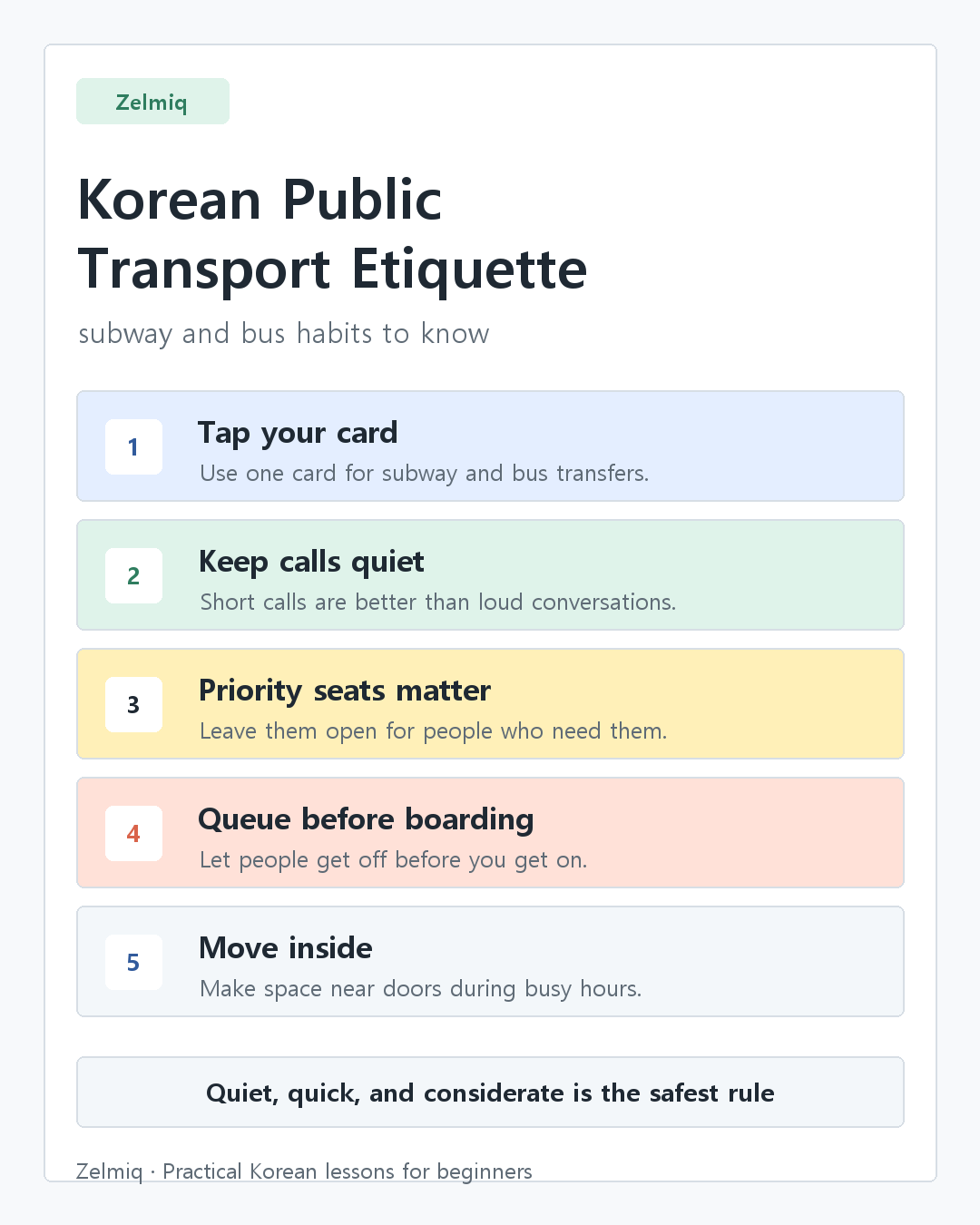
A simple guide to Korean public transportation etiquette for foreigners, including subway, bus, priority seats, quiet behavior, bags, and useful Korean phrases.
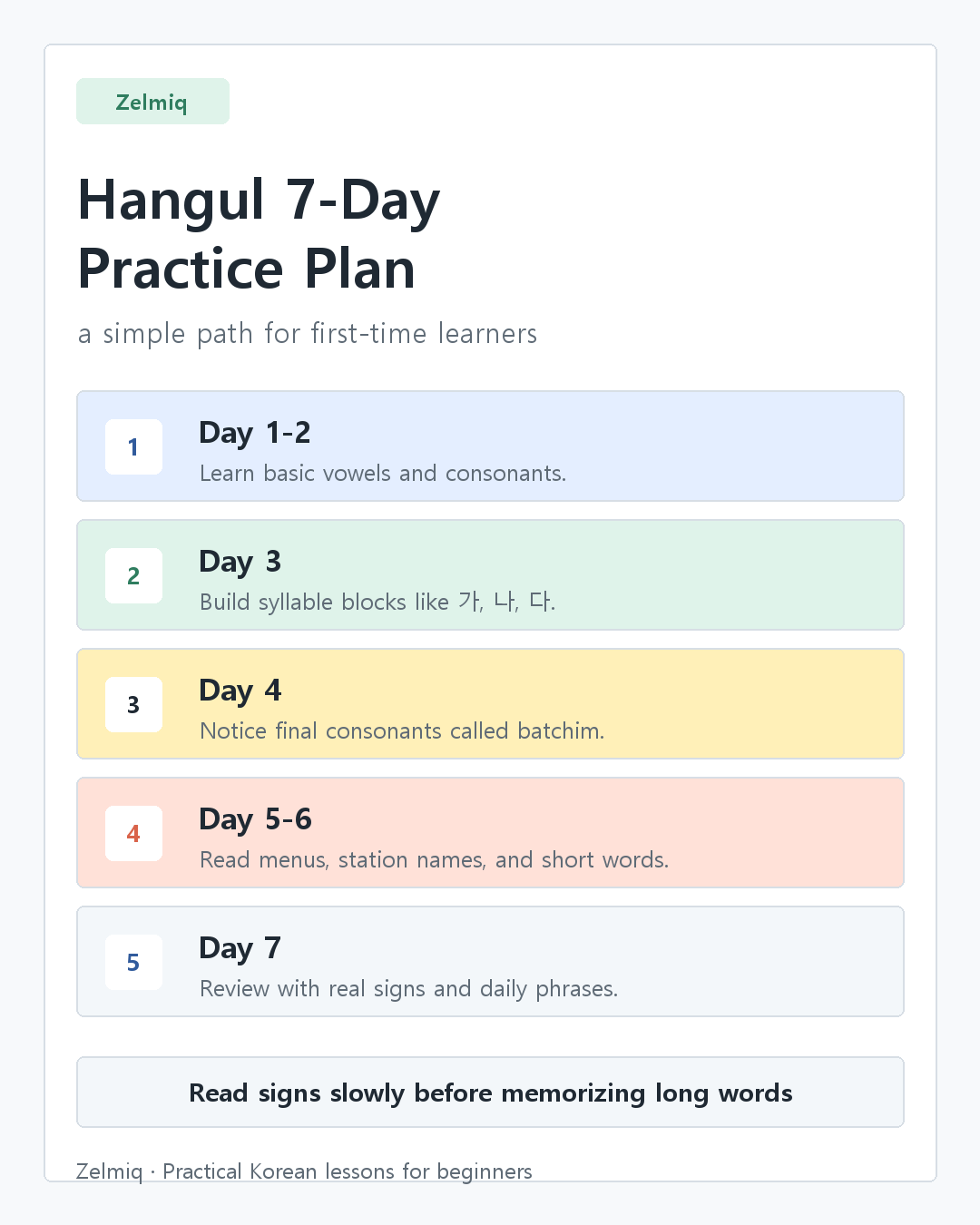
A practical 7-day Hangul practice plan for beginners who want to read Korean more confidently without relying on romanization.
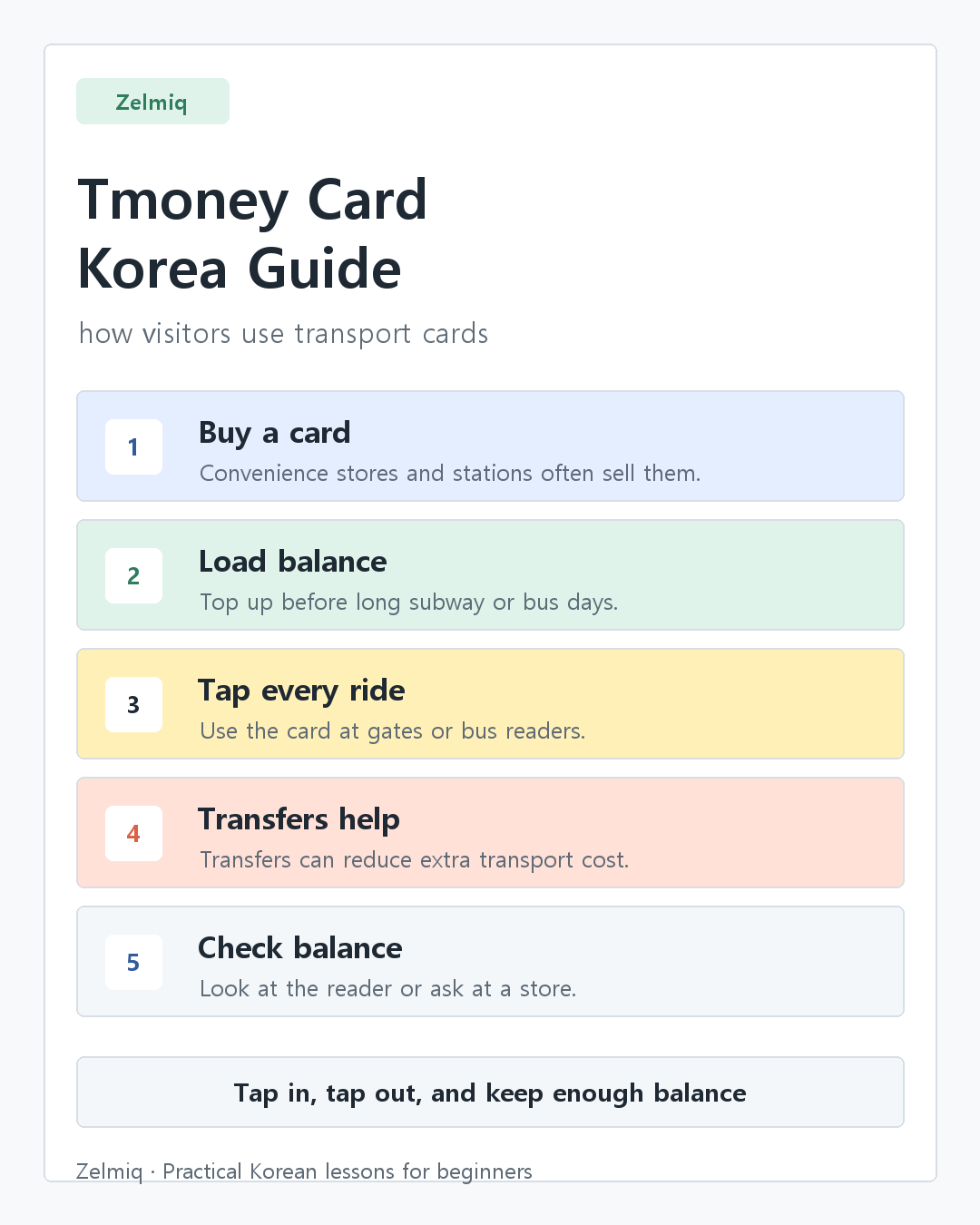
A practical beginner guide to using a Tmoney card in Korea, including where to buy it, how to recharge it, how to tap in and out, and when to consider tourist transportation cards.
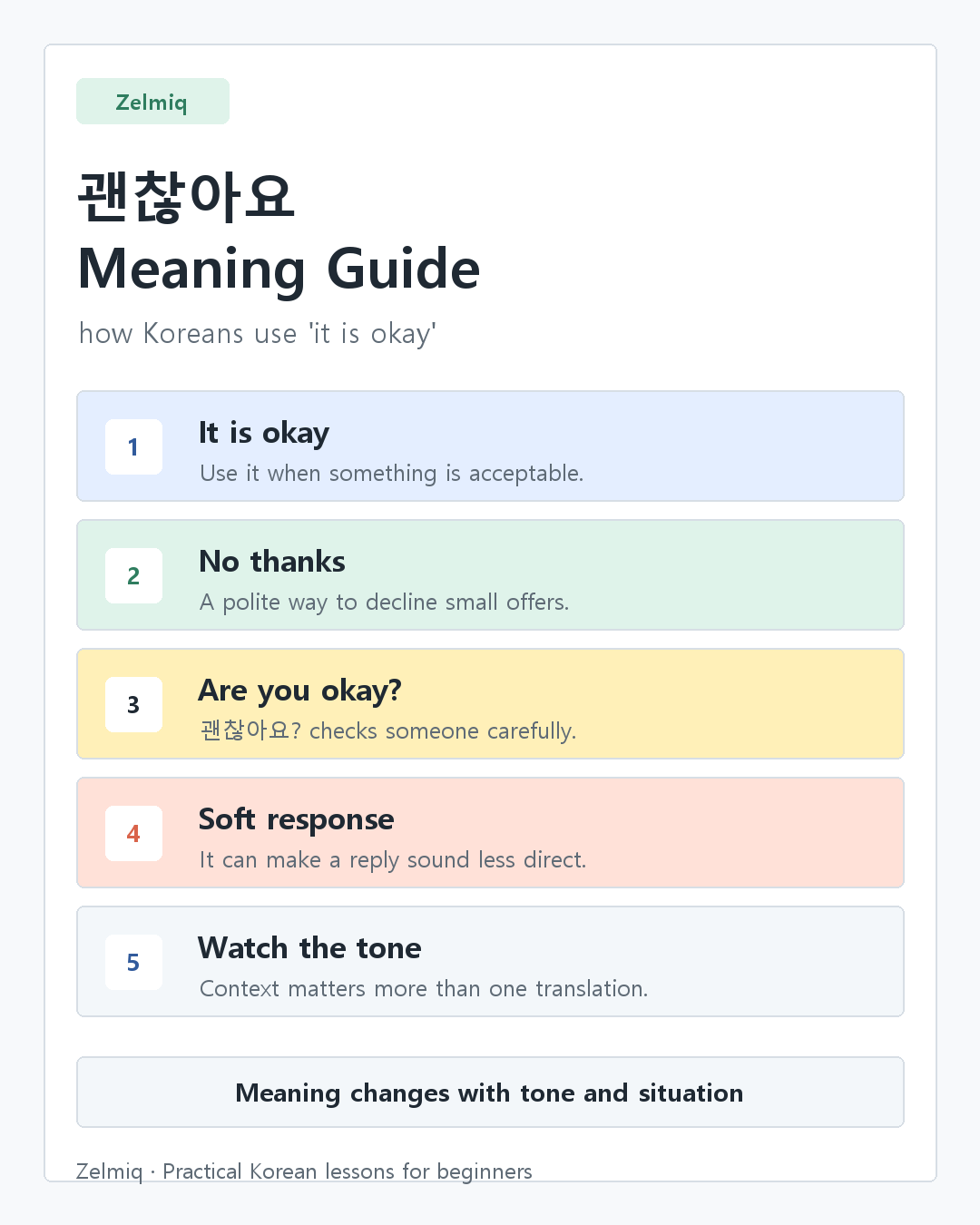
The Korean phrase 괜찮아요 is one of the most useful expressions beginners can learn. It often means “It’s okay,” “I’m okay,” “That’s fine,” or even “No thanks,” depending on the situation. This is why 괜찮아요 meaning can feel confusing at first. English uses different phrases for different situations, but Korean can use 괜찮아요 in many … 더 읽기
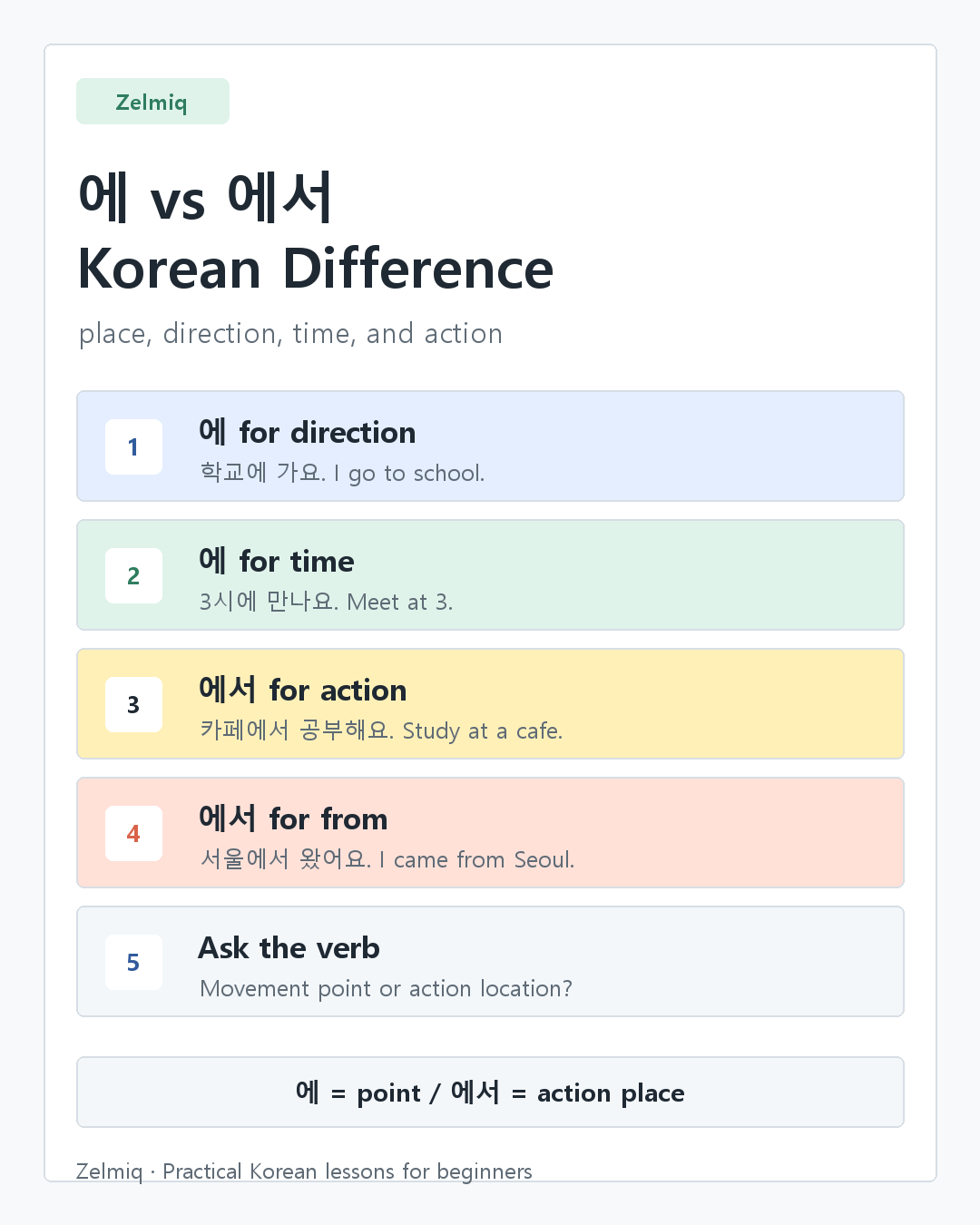
Many Korean beginners get confused by 에 and 에서 because both can be connected to places. You may see sentences like 학교에 가요 and 학교에서 공부해요, and wonder why the particle changes. Here is the simple answer: 에 often points to a destination, time, or location of existence. 에서 usually marks the place where an … 더 읽기
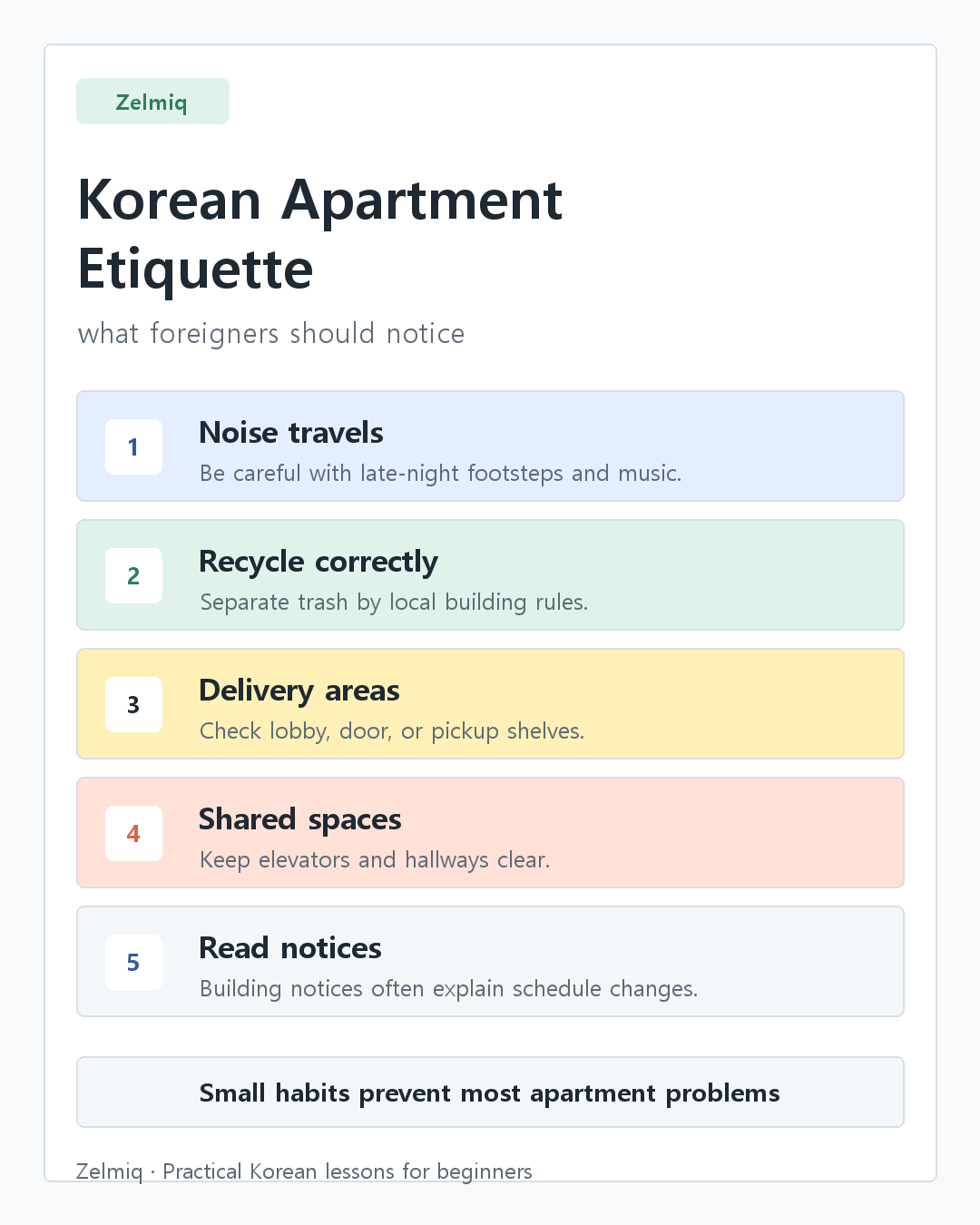
If you plan to live in Korea, there is a good chance you will spend time in an apartment. Apartments are one of the most common housing types in Korean cities, and they come with their own social rules. Understanding Korean apartment etiquette can help you avoid awkward moments and live more comfortably. The most … 더 읽기
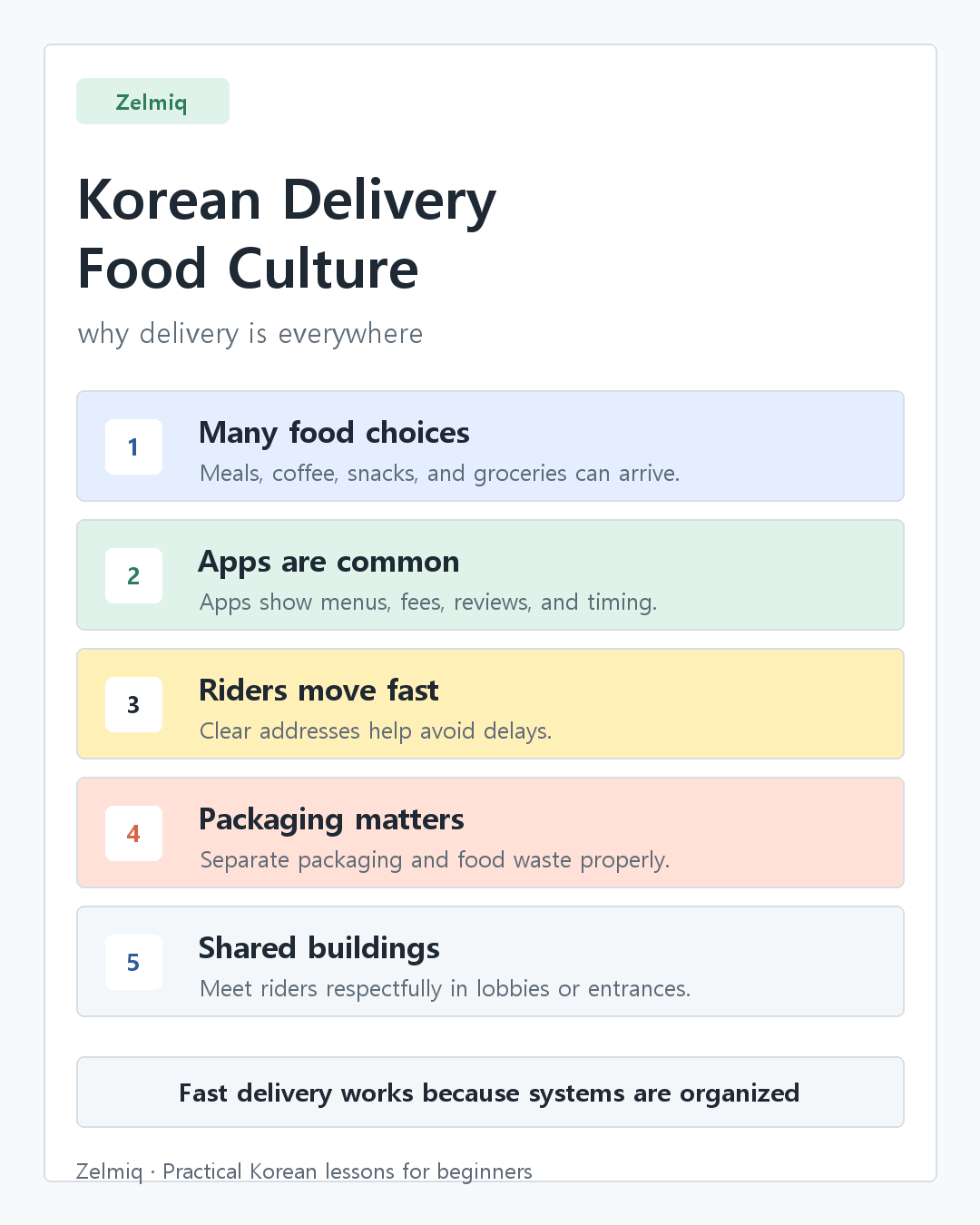
Food delivery is not just a convenient service in Korea. It is part of everyday life. From fried chicken at midnight to jjajangmyeon on a lazy weekend, Korean delivery food culture is fast, flexible, and surprisingly social. For foreigners, Korean food delivery can feel almost magical. Food arrives quickly, choices are endless, and people order … 더 읽기
If you have ever eaten at a Korean restaurant, you may have noticed something surprising before your main dish even arrived: many small plates suddenly appear on the table. Kimchi, seasoned vegetables, pickled radish, fish cakes, bean sprouts, or tiny pancakes may come together like a colorful little feast. These small side dishes are called … 더 읽기
If you feel confused when Koreans talk about age, you are not the only one. The simple answer is this: South Korea now officially uses international age in legal and administrative settings, but many people still mention “Korean age” in casual conversation because it was part of everyday culture for a very long time. The … 더 읽기
If you have ever seen a name like Kim Minji (김민지) or Park Jisung (박지성) and wondered which part is the first name, you are definitely not alone. The short answer is this: in Korean name order, the family name usually comes first, and the given name comes second. So in Kim Minji, Kim is … 더 읽기