If you plan to live in Korea, there is a good chance you will spend time in an apartment. Apartments are one of the most common housing types in Korean cities, and they come with their own social rules. Understanding Korean apartment etiquette can help you avoid awkward moments and live more comfortably.
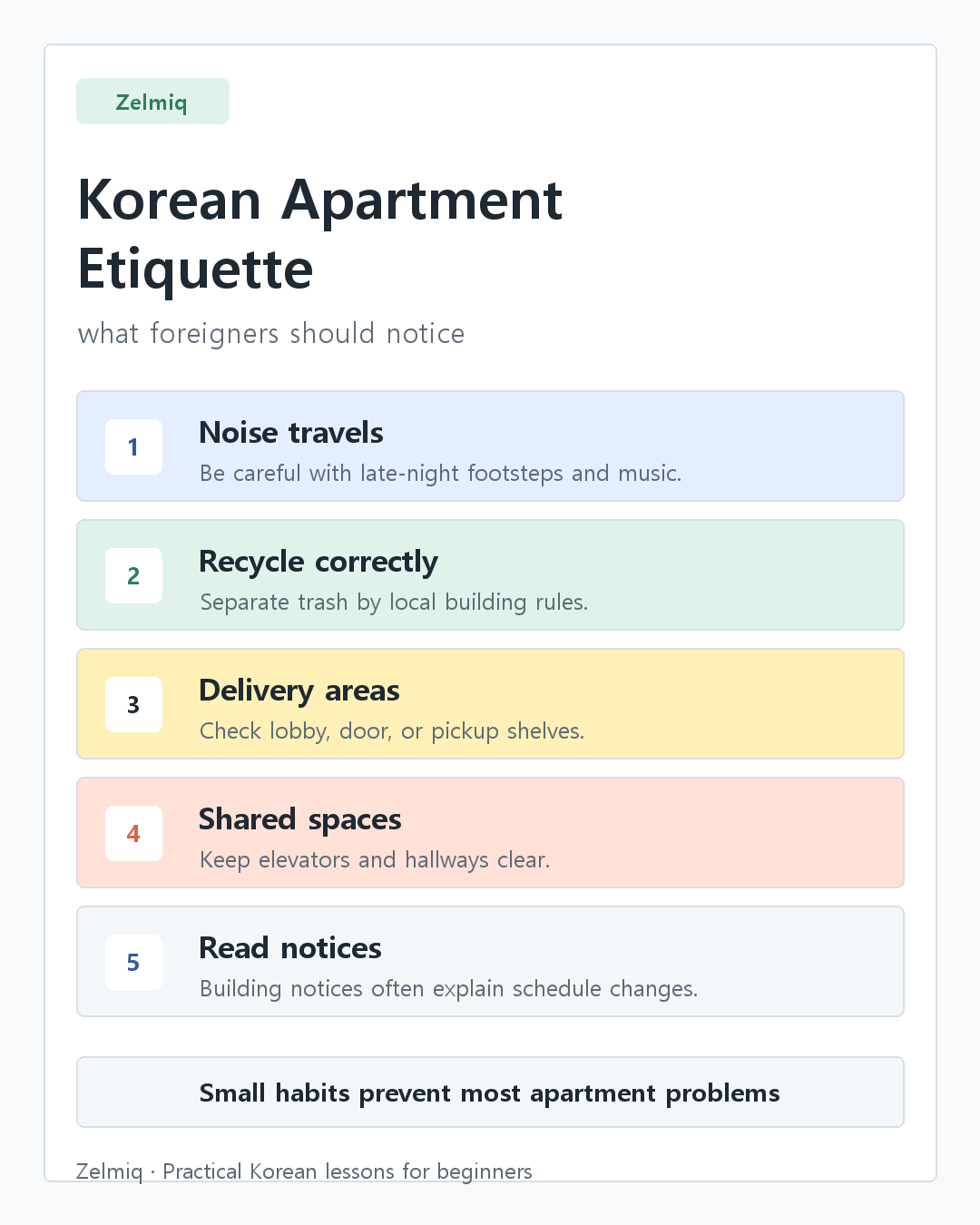
The most important idea is simple: Korean apartments are shared living spaces. Even when you are inside your own home, your daily habits can affect neighbors above, below, and beside you. Noise, shoes, recycling, elevators, and greetings all matter more than beginners may expect.
Why Apartment Etiquette Matters in Korea
Korean cities are dense, and many people live in high-rise apartment buildings. Because many households live close together, small actions can feel bigger. A chair dragging across the floor, loud footsteps late at night, or music through thin walls may disturb someone nearby.
This does not mean you need to be nervous all the time. Korean apartment etiquette is mostly about awareness. If you understand the basic expectations, you can live naturally and respectfully.
Apartment communities in Korea may also have rules posted in elevators or notice boards. These can include recycling days, elevator repairs, pest control schedules, parking rules, or quiet-hour reminders. Even if you cannot read every Korean word, it is helpful to pay attention to notices.
Noise Manners and Shared Walls
Noise is one of the biggest topics in Korean apartment life. In Korean, noise between floors is called cheunggan so-eum. It literally means “floor-to-floor noise.” This is a common issue because many apartments are built vertically, with families living directly above and below each other.
Common sources of noise include:
- Heavy footsteps
- Children running indoors
- Moving furniture
- Loud music or TV
- Exercise equipment
- Washing machines late at night
- Parties or loud conversations
As a beginner, the safest habit is to keep things quieter at night, especially after 10 p.m. If you work out at home, avoid jumping exercises late in the evening. If you need to move furniture, try to do it during the day.
Many Korean homes use soft slippers or floor mats to reduce noise. This is especially common in homes with children. If you are living in an apartment long-term, a simple floor mat can help a lot.
Shoes, Recycling, and Daily Habits
In Korea, people usually take off their shoes at the entrance of the home. The small entrance area is called hyeongwan. Outdoor shoes stay there, and people wear indoor slippers or go barefoot inside.
This habit is not only about cleanliness. It is connected to Korean floor culture. Many Korean homes have heated floors called ondol, and people often sit, stretch, or even sleep close to the floor. Keeping the floor clean matters.
Recycling is another major part of Korean apartment etiquette. Korea has detailed recycling rules, and apartment complexes often have separate areas for plastic, paper, glass, cans, food waste, and general trash. Food waste usually goes into a special bin, and general trash often requires official paid trash bags.
Rules can differ by district or building, so it is best to check your apartment’s instructions. If you are unsure, ask your landlord, building manager, or a Korean friend.
Elevator manners are also simple but important. Let people exit first before entering. If the elevator is crowded, move back to make space. If someone is carrying heavy bags, holding the door for a moment is a small but kind gesture.
Simple Tips for Living Comfortably in a Korean Apartment
You do not need perfect Korean manners to be a good neighbor. A few thoughtful habits are enough.
Try to keep noise low at night. Take off shoes indoors. Learn the recycling system in your building. Read building notices when possible. Greet neighbors with a small nod or a simple annyeonghaseyo if the moment feels natural.
If a neighbor complains about noise, try not to take it personally right away. Apartment noise can be stressful, and sometimes people are sensitive because they have experienced it for a long time. A polite response can prevent the situation from becoming worse.
You can say:
“Joesonghamnida. Jogeum deo josimhalkkeyo.”
죄송합니다. 조금 더 조심할게요.
“I’m sorry. I’ll be a little more careful.”
Korean apartment etiquette is really about living together in a close space. Once you understand that, the rules feel less strange. They are not meant to make life difficult. They help many people share one building with less stress.
For foreigners, learning these small habits can make daily life in Korea smoother, kinder, and much more comfortable.
FAQ
Q. Does every Korean person follow this rule exactly?
No. Culture can vary by person, age, region, and situation. This guide explains common patterns, not absolute rules.
Q. What should foreigners do if they are unsure?
Choose the more polite and observant option first. Watching what others do in the same situation is often helpful.
Q. Is this still relevant in modern Korea?
Yes, but modern Korean life is flexible. Traditional expectations may be stronger in formal situations and lighter among close friends.