Food delivery is not just a convenient service in Korea. It is part of everyday life. From fried chicken at midnight to jjajangmyeon on a lazy weekend, Korean delivery food culture is fast, flexible, and surprisingly social.
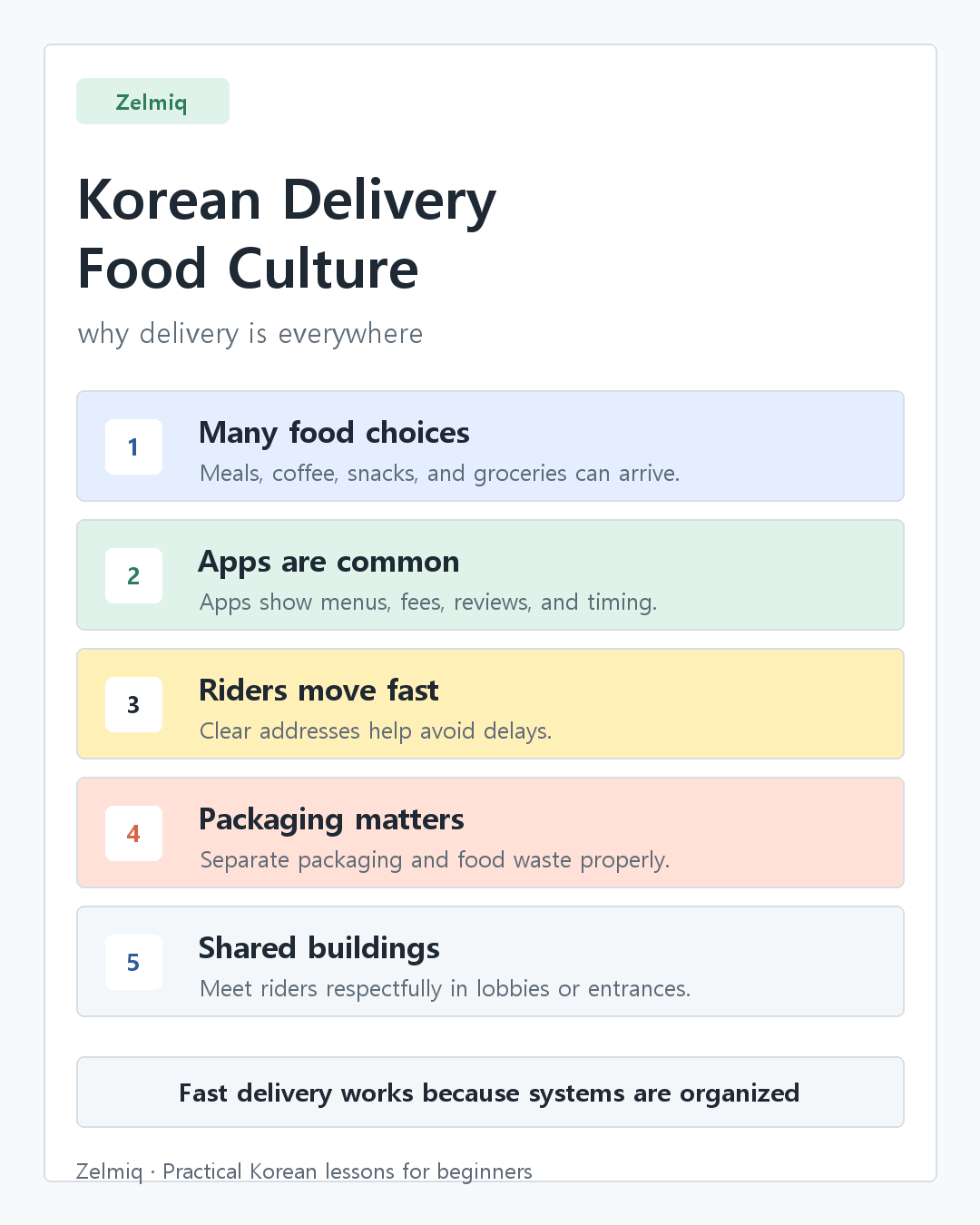
For foreigners, Korean food delivery can feel almost magical. Food arrives quickly, choices are endless, and people order delivery not only at home but sometimes at parks, offices, and gatherings. To understand modern Korean life, delivery food is a surprisingly good place to start.
Why Is Food Delivery So Popular in Korea?
Korea is a country where speed and convenience are deeply connected to daily life. Many people live in dense cities, especially in apartment complexes. Restaurants, delivery drivers, and customers are often located close to each other. This makes fast delivery easier.
Busy work schedules also play a big role. After a long day, cooking can feel exhausting. Ordering food becomes an easy way to relax. For students, office workers, couples, and families, delivery is a normal option, not a special event.
Technology made this culture even stronger. Food delivery apps allow people to browse menus, read reviews, pay online, and track orders. Even if someone does not want to make a phone call in Korean, apps make the process smoother.
But Korean delivery food culture is not only about efficiency. It is also about comfort. Ordering food can feel like saying, “Let’s take it easy tonight.”
What Foods Do Koreans Usually Order?
One of the most iconic delivery foods in Korea is fried chicken. Korean fried chicken is often crispy, saucy, and served with pickled radish called chicken mu. It is popular with beer, making the famous combination chimaek: chicken plus maekju, which means beer.
Another classic is jjajangmyeon, black bean noodles. In Korea, jjajangmyeon has a strong connection with delivery culture. Many people remember ordering it on moving day, during study sessions, or when they wanted a quick and filling meal.
Other popular delivery foods include:
- Tteokbokki: spicy rice cakes
- Jokbal: braised pig’s feet
- Bossam: boiled pork wraps
- Pizza
- Burgers
- Korean stews
- Sushi
- Malatang
- Bunsik snacks like gimbap and fried foods
Delivery food in Korea is not limited to cheap or casual meals. These days, you can find cafe drinks, desserts, salads, premium dishes, and even convenience store items through delivery apps.
Delivery Apps, Apartments, and Everyday Life
If you live in a Korean apartment, delivery is usually very simple. The rider comes to the building, uses the entrance system if needed, and brings the food to your door. Many people choose “leave at the door” delivery, especially after contactless delivery became common.
In Korea, apartment buildings often have clear addresses, building numbers, and unit numbers. This structure helps delivery work smoothly. However, if you are a foreigner living in Korea, writing your address correctly is very important. A small mistake in the building number or unit number can confuse the driver.
Food delivery is also connected to social life. Friends may gather at someone’s home and order several dishes together. Families may order chicken while watching TV. Couples may order late-night tteokbokki. Office teams may order lunch during a busy workday.
One interesting part of Korean delivery culture is how normal it feels. In some countries, delivery may be seen as a weekend treat. In Korea, it can be part of ordinary daily rhythm.
Tips for Foreigners Ordering Delivery Food in Korea
If you are new to Korea, delivery apps may be intimidating at first. Some apps may require a Korean phone number, Korean address format, or local payment method. If you are traveling, it may be easier to ask hotel staff or use restaurants that support foreign-friendly ordering.
Here are a few useful Korean phrases:
“Baedal dwaeyo?”
배달 돼요?
“Do you deliver?”
“Yeogi juso-yeyo.”
여기 주소예요.
“This is the address.”
“Mun ap-e noajuseyo.”
문 앞에 놓아주세요.
“Please leave it in front of the door.”
Also, be careful with spicy levels. Korean delivery food can be much spicier than expected. If the app lets you choose spice level, start mild. You can always try spicier food later.
Korean delivery food culture shows a modern side of Korea: fast, connected, practical, and full of flavor. It is not only about getting food quickly. It is about how Koreans rest, gather, celebrate small moments, and make everyday life easier.
FAQ
Q. Does every Korean person follow this rule exactly?
No. Culture can vary by person, age, region, and situation. This guide explains common patterns, not absolute rules.
Q. What should foreigners do if they are unsure?
Choose the more polite and observant option first. Watching what others do in the same situation is often helpful.
Q. Is this still relevant in modern Korea?
Yes, but modern Korean life is flexible. Traditional expectations may be stronger in formal situations and lighter among close friends.