Korean Clothing Store Phrases for Beginners: Size, Fitting Room, Price, and Payment
Learn simple Korean clothing store phrases for size, color, fitting rooms, price, payment, exchanges, and polite shopping help.
Learn simple Korean clothing store phrases for size, color, fitting rooms, price, payment, exchanges, and polite shopping help.
Learn simple Korean hotel check-in phrases for reservations, passport confirmation, room requests, breakfast, Wi-Fi, checkout, and help.
Learn practical Korean grocery store phrases for finding items, asking prices, paying, receipts, bags, and simple help situations in Korea.
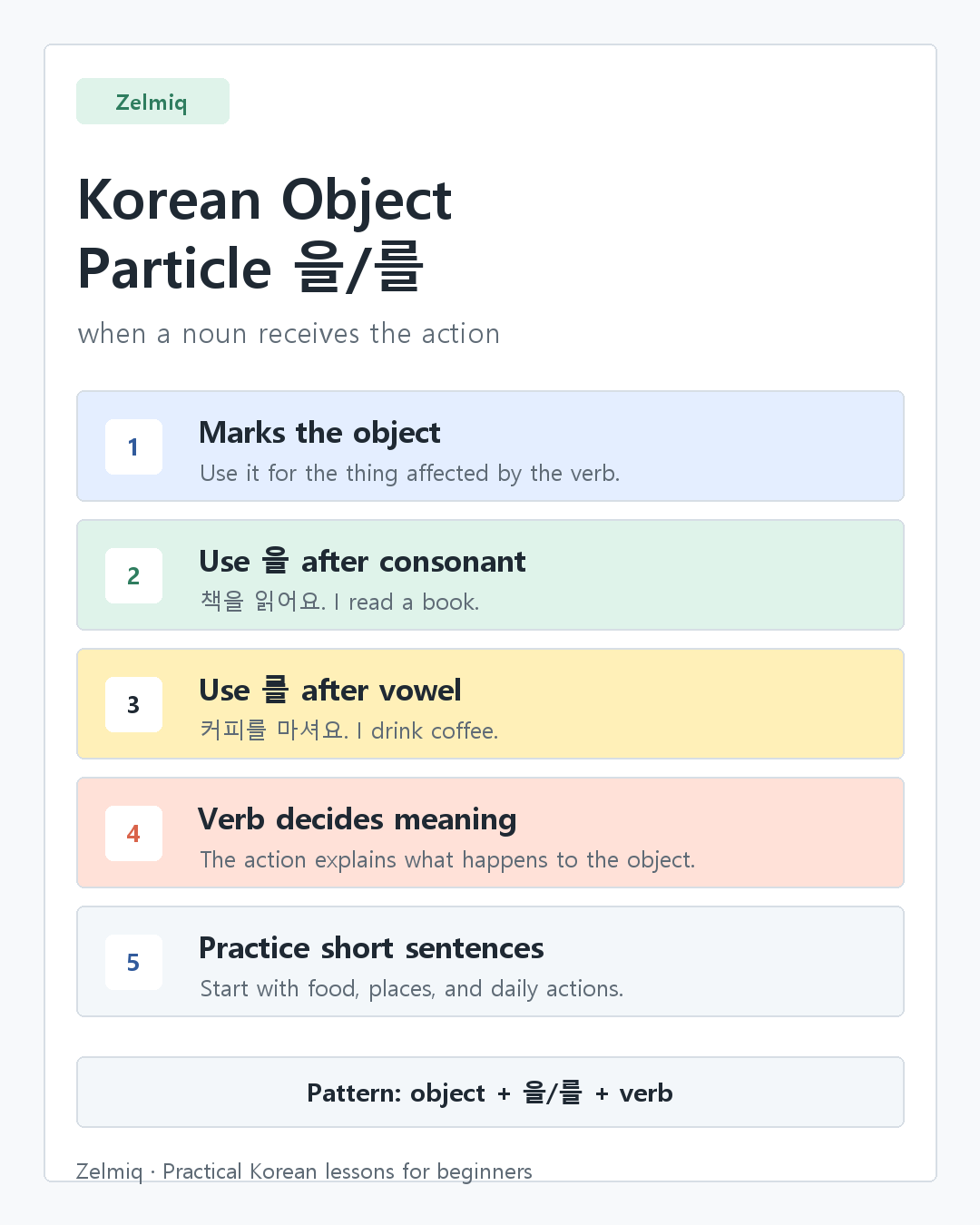
A beginner-friendly explanation of the Korean object particle 을/를, including when to use each form, common mistakes, and simple sentence examples.
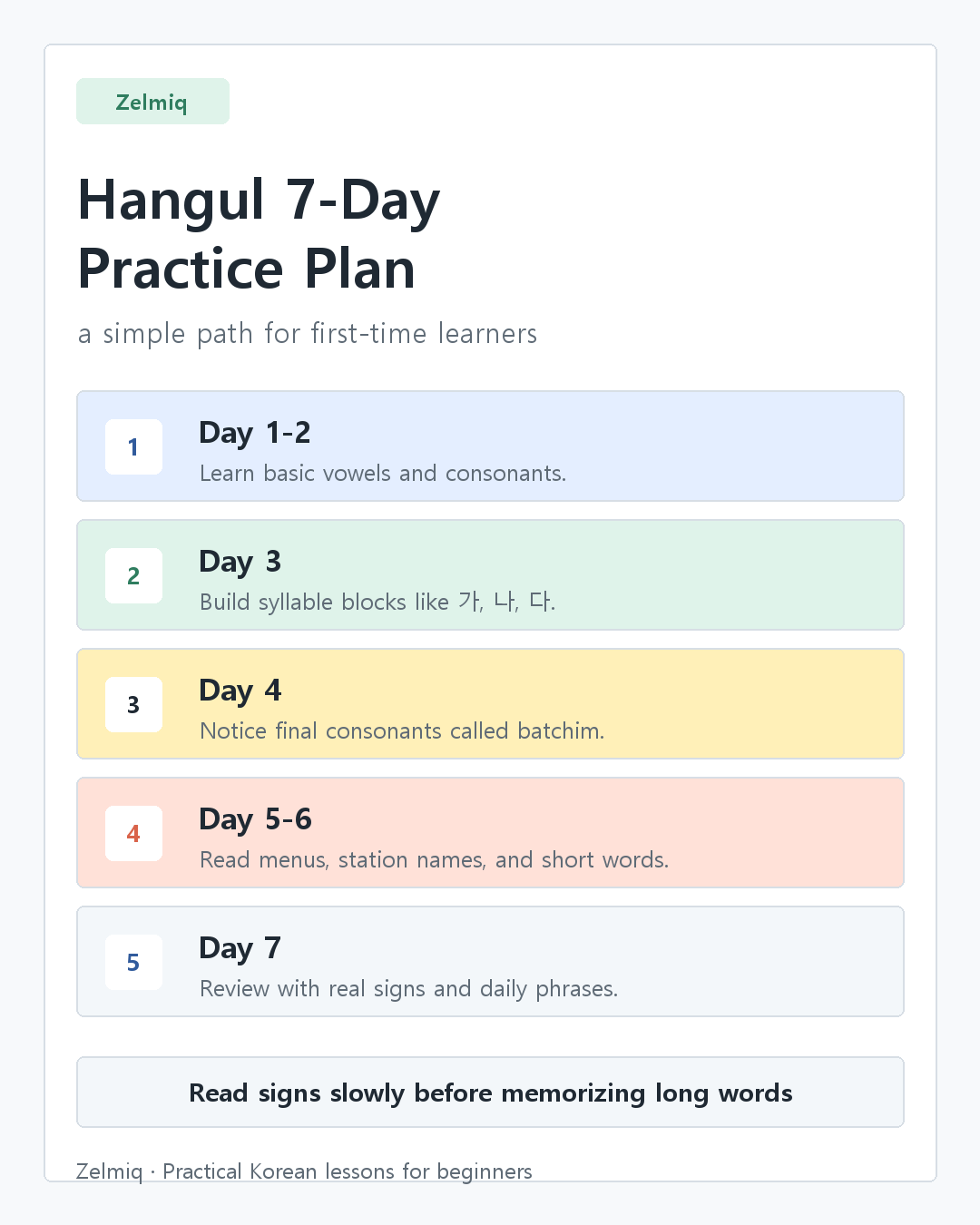
A practical 7-day Hangul practice plan for beginners who want to read Korean more confidently without relying on romanization.
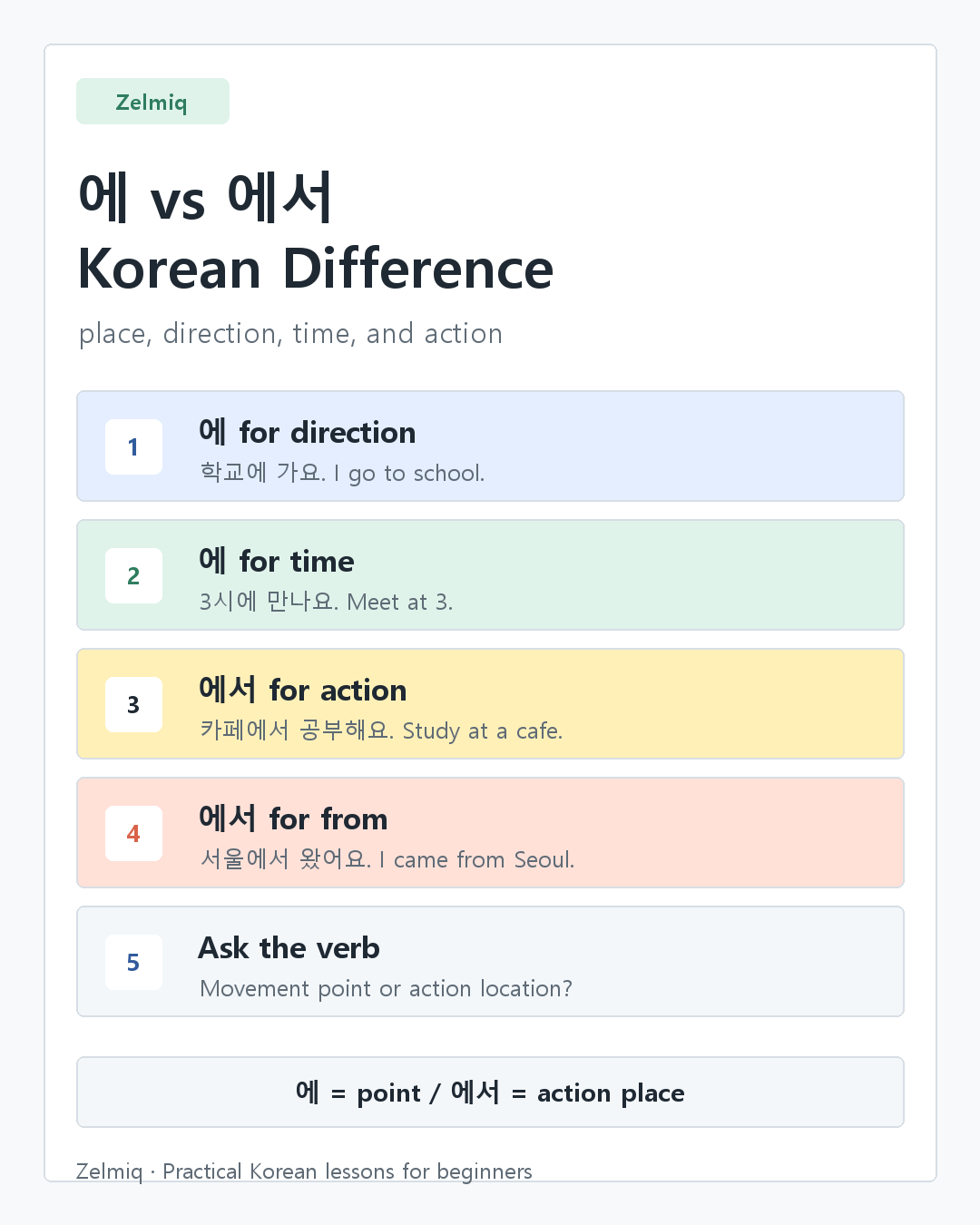
Many Korean beginners get confused by 에 and 에서 because both can be connected to places. You may see sentences like 학교에 가요 and 학교에서 공부해요, and wonder why the particle changes. Here is the simple answer: 에 often points to a destination, time, or location of existence. 에서 usually marks the place where an … 더 읽기
If you want to say “not” in Korean, you will quickly meet 안 and 못. At first, they can look similar because both appear before verbs. But they do not mean exactly the same thing. The simplest explanation is this: 안 usually means “do not” or “not,” while 못 usually means “cannot” or “am unable … 더 읽기
Korean drinking culture often looks exciting, loud, and full of soju glasses in dramas and variety shows. Real life can be lively too, but the deeper point is not just alcohol. It is social connection. In Korea, drinking can be part of friendship, celebration, work culture, and group bonding. If you want the short version … 더 읽기
If you want to make plans, talk about birthdays, read schedules, or understand appointments in Korea, you need a basic handle on dates and days of the week in Korean. The nice part is that this system is much more regular than many beginners expect. In fact, once you learn a few patterns, Korean calendar … 더 읽기
If telling time in Korean feels confusing, you are not imagining it. Korean uses two number systems, and time uses both. But here is the good news: the rule is actually very simple. Use Native Korean numbers for hours, and Sino-Korean numbers for minutes. That is the core answer beginners need first. Once you remember … 더 읽기